Dominic Tan
An adaptable and detail-oriented professional with a background in operations coordination, currently pursuing a BSc in Information and Communications Technology.
Past Work
A collection of projects spanning platform architecture, UI/UX prototyping, and market validation.
About
I am a problem-solver who bridges the gap between operational workflows and technical execution. Currently pursuing my BSc in Information and Communications Technology, I specialise in aligning diverse stakeholders, optimising complex systems, and guiding digital products from concept to delivery. This is my journey so far.
Contact
I am always interested in new opportunities, collaborations on cool projects and conversations about technology. Feel free to get in touch!
Product Lead & UI/UX Designer | myBeacon
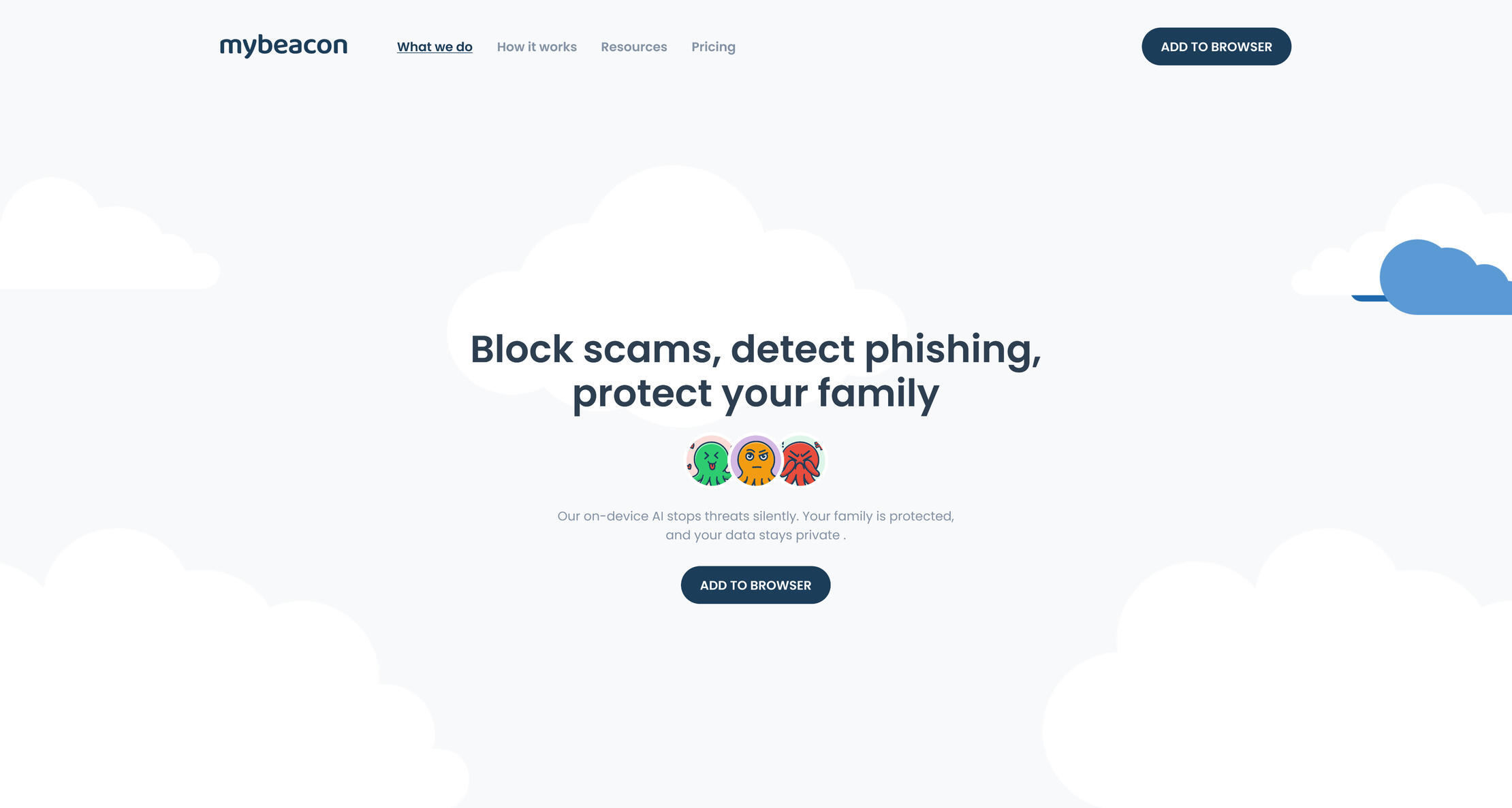
I conceptualised the product vision for a minimally intrusive cybersecurity browser extension, initially catalysed by an observed 25% phishing simulation failure rate in a well known tech company. Beyond designing the end-to-end user journeys and mid-fidelity UI/UX, I was responsible for researching the underlying tech stack and evaluating various AI models. I ultimately planned a solution around local Large Language Models to ensure strict user data privacy while maintaining a low-cost operational footprint designed for mass adoption.
As an ongoing side project, I have currently developed the UI design for the extension's main interface. I have also created a rough idea of what I want the landing page to look like, so that all designs within this project carry the same tone of warmth and friendliness. My primary focus remains on balancing complex cybersecurity parameters with extreme user accessibility, ensuring the extension will eventually operate quietly in the background to minimise alert fatigue while maximising threat detection.
Through this ongoing development process, I am learning that the most effective security products are those requiring the least amount of user friction; if a security measure is intrusive, end-users will inevitably turn it off or remove it. I am also learning the critical importance of researching technical feasibility - such as the hardware constraints of running local LLMs directly within a browser, early in the discovery phase to ensure that the UX I am designing is actually buildable and cost-effective to scale.



Product Consultant & UX Architect | Tixflare
I collaborated on the product architecture for a dual-sided ticketing marketplace, focusing on optimising the end-to-end user journeys for both buyers and sellers. For the consumer experience, I mapped out the entire ticket purchase flow, from the initial event discovery and interactive seat mapping down to a frictionless checkout process.
On the supply side, I conceptualised the workflows and layout for the seller dashboard. This included defining the inventory management system - allowing organizers to seamlessly control ticket quantities, pricing tiers, and seat locations - alongside a comprehensive analytics table to track customer data and sales metrics. I translated these complex platform requirements into detailed user stories and mid-fidelity wireframes, providing a clear blueprint before handing the project over to the visual design team for final UI execution.
Although the technical mapping and UX were successful, I ultimately made the strategic decision to exit the project. As we dug deeper into the marketplace dynamics, I identified significant anti-scalping compliance risks inherent in the platform's model. This experience reinforced a critical product management lesson: building a functional marketplace is only half the battle; ensuring it operates within strict ethical and regulatory boundaries is what makes a product truly viable long-term.


Founder & Product Owner | ValkyrieMC
I architected the product vision and managed communication among multiple freelance studios and developers to create custom in-game assets and contributed to the design of game modes, maps and 3D models. Beyond vendor management, I was responsible for the end-to-end technical infrastructure, from acquiring bare-metal servers to configuring the distributed proxy network required to seamlessly route player traffic across multiple server instances.
We reached 75% completion (finalising maps, dungeons, and campaign scripts). However, a core Minecraft update unexpectedly broke our custom model infrastructure, requiring two months of rework. Facing budget overruns and dropping player interest, I made the data-driven decision to sunset the project to prevent further sunk costs.
I learned that when you build entirely on third-party platforms, unexpected updates can become an immediate technical debt. I also learned true product ownership is not just about building. It is also having the discipline to shut down projects when the data tells you that its no longer viable.


Product Lead & UX Researcher | Beastlabs
I directed the product lifecycle for a gaming-centric squad-finding platform designed to connect like-minded players. The core problem we addressed was the friction gamers face when trying to find reliable teammates. I defined the product requirements to include a user-vetting system, live API integration to pull and display in-game player statistics, and native social features like text and voice chat.
We successfully developed the platform from an initial concept into a high-fidelity interactive Figma prototype. I conducted user testing sessions, allowing gamers to navigate the core user flows hands-on. The feedback validated our hypothesis, with users confirming a strong demand for the matchmaking utility.
Despite positive user validation, we realised we could achieve the exact same utility at a fraction of the development cost by leveraging existing infrastructure - specifically, building Discord bots paired with a web dashboard - rather than building a standalone platform from scratch. While the project was ultimately sunsetted due to time constraints, it reinforced a critical product management lesson: always evaluate if a standalone product is necessary, or if integrating into the user's existing ecosystem provides a more efficient, cost-effective solution.


